


北京房价均降1万
Chinese commercial space firm completes long-duration test of reusable rocket engine_我的网站

一 |
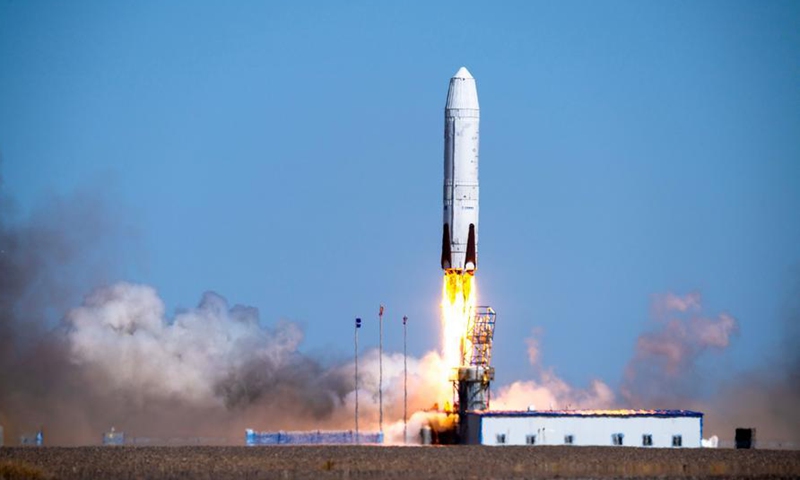
China's commercial reusable launch vehicle sector continues to make steady progress, as a company announced on Friday that it had completed a long-duration test firing of an engine for a large recoverable carrier rocket.
Deep Blue Aerospace, a commercial space startup based in Wuxi, east China's Jiangsu Province, said it recently completed a 100-second static-fire test of its Thunder-RS engine, a 130-tonne-class liquid-oxygen kerosene engine designed for the company's large reusable rocket, Nebula-2.
The test reached 1,297.5 kilonewtons of thrust, or about 132.3 tonnes. The company said multiple short-duration test firings had been conducted previously to evaluate engine performance, with no anomalies recorded.
The recent 100‑second run was the engine's first crossing of that steady‑state duration threshold, serving as a comprehensive verification of its performance, the company said.
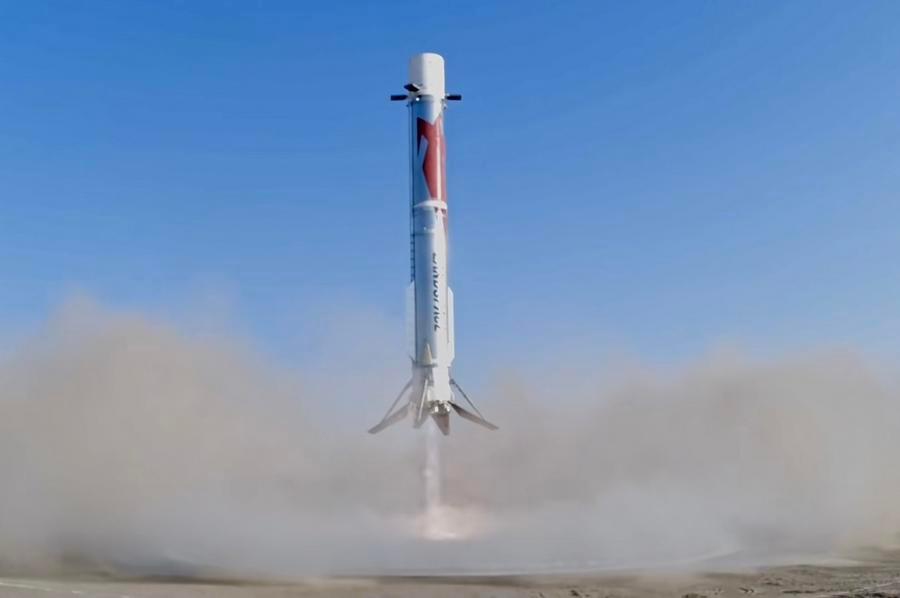
Rocket reusability can greatly cut launch costs and boosts launch frequency, making it key to achieving large-scale, routine access to space.
China launched the reusable rocket Zhuque-3 on Wednesday morning, achieving its first recovery of a rocket's first stage on land, marking the country's first successful land-based recovery. This mission followed the successful sea-based net recovery of the Long March-10B's first stage on July 10.
More models of Chinese reusable rockets are scheduled to conduct tests this year.
。

二 | 8 月 25 日消息,据央视新闻报道,北京轨道交通 22 号线(红庙 — 平谷)今日(8 月 25 日)正式开启空载试运行。

三 | 该线作为“轨道上的京津冀”标志性工程,是首条横跨京冀两地的城市轨道交通线路。空载试运行标志着 22 号线向年底基本具备开通条件目标迈出了关键一步,京津冀交通一体化正从蓝图加速驶向现实。22 号线(红庙 — 平谷)西起朝阳区红庙,东至平谷新城,全长约 79.1 公里,共设车站 20 座(北京段 15 座、河北段 5 座)。线路横跨北京朝阳、通州、平谷以及河北三河,串联起 CBD 核心区、北京城市副中心、河北燕郊、平谷新城等重点功能区。项目建成后,将实现河北省三河市与北京城市轨道交通网的“无缝衔接”,便利跨省通勤,显著增强北京城市副中心对北三县的辐射带动作用,以交通先行引导功能疏解与产业协同。据北京市重大项目办相关负责人介绍,22 号线是区域交通互联互通的“大动脉”。开通后,线路将在红庙站与 14 号线、管庄站与 1 号线(八通线)、北关站与 6 号线、城市副中心站与 6 号线及京唐城际实现高效换乘。该线速度优势明显,高架段最高时速达 160 公里,地下段达 120 公里,实现了“高铁速度”与“地铁密度”的完美结合。届时,从河北燕郊镇到北京城市副中心最快仅需 9 分钟,到朝阳 CBD 核心区红庙站最快约 28 分钟。据京投轨道公司相关负责人介绍,22 号线建设全过程贯穿科技创新。在智能建造方面,首次采用百米长轨工厂化预制与机械化铺设,同时运用高铁先进的精密测量、线路精调、动态测试等技术,实现线路的高平顺性;自主研发智能盾构施工体系,实现掘进全过程智能操控;平房停车场配套建设光伏发电项目,高架段大规模应用预制槽型梁,打造绿色施工新标杆。在智慧运营方面,建设了北京首条全面面向乘客服务的智能视频分析平台,实现客流监测、安全预警与乘客服务的深度融合。从报道获悉,按照计划,本次空载试运行将分两个阶段实施:第一阶段重点开展车辆、信号、通信等八大系统的综合联调与功能测试;第二阶段将严格按照运行图开展“跑图”试运行,对列车正点率、运行图兑现率等关键指标进行全方位验证,确保线路各项运行指标达到初期运营前安全评估标准。
Current article:http://06w08sg.cuntoujuefourantapai.cfd/oungnxg/20260826/72023.html
Published on:21:07:36