
杀害班花逃15年
American teacher takes jar of sand as symbol of shared ground in forest he helped grow in China_我的网站

A |
据日本《读卖新闻》报道,岸田政府计划修改防卫费的计算方式,全面向北约标准看齐,计划5年内将日本国防相关支出占经济总量的比例提高至2%。 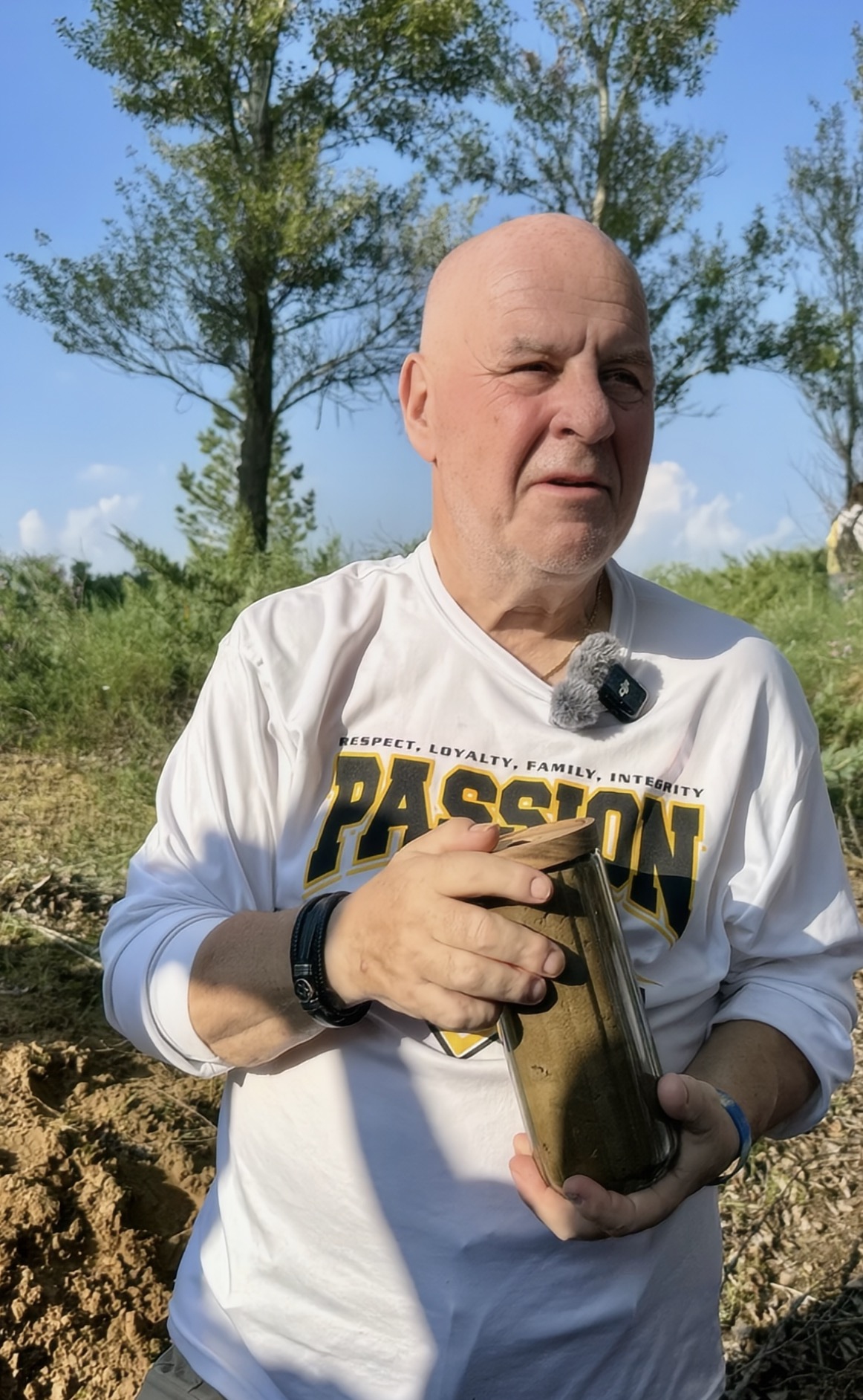
On Monday afternoon, Ronald Sakolsky, an American teacher, set foot once again on the soil of the Mu Us Desert, in the Uxin Banner of Ordos, North China’s Inner Mongolia Autonomous Region. He first came here in 2000. Back then, the land was little more than drifting sand. Today, it is green with trees – a transformation driven by decades of local effort.
He stood within Sakolsky Forest, a woodland formally named to honor his early donation toward local ecological restoration. There, he carried out a plan he had held long before this trip: filling a jar with sand from the desert to bring home to the US.
More than two decades ago, sand was the one thing this place had in abundance. In 1999, when Sakolsky arrived in China as a participant in a bilateral teacher exchange program, he was moved by the tireless efforts of Chinese desert fighter Yin Yuzhen and her husband to curb desertification in the Mu Us Desert. He raised $5,000 – equivalent in 1999 to three years of income for Yin’s entire family – to fund their local tree-planting initiative.
The young saplings bought with that donation have since matured into more than 50,000 full-grown trees, transforming the once desolate, sandy wasteland into a thriving green landscape.
When Sakolsky met Yin at the airport on Sunday, 26 years after his first visit to Inner Mongolia, he joked that he could not take a tree from the Mu Us Desert, but he could slip some sand into his shoes and carry a piece of the land back with him. Now, he had found exactly the sand he wanted – not just any sand, but from a place where persistence had turned desert into life, and where his own name had become part of that story.
“Promise is a promise,” he said. “Ms. Yin made a promise, and she fulfilled it.”
For Sakolsky, the sand is not just dirt. It is a metaphor, a bridge, a shared ground. He plans to tell his grandchildren what it means. “It’s not just a piece of sand in the jar,” he said. “It’s a jar of love.”
He used the jar of sand to symbolize that America and China share a relationship rooted in the same soil. He shook the jar, holding its two ends as if they were the two countries, and said that it shows we’re all on the same planet.
There is an old American joke, he noted, that if you dig a hole deep enough, you will eventually reach China. “We’re all on the same planet,” he said.
Earlier that day, while visiting Yin’s home, he spoke about the need for Americans and Chinese to see each other as family. “All Americans should understand that Chinese people and Americans can be family,” he said. “We can transcend differences if we focus on our common ground. We all love our countries, and we all value loyalty and respect – these are the shared virtues we hold dear.”
As for the sand he collected, Sakolsky said he would treat it as a treasure, alongside all his other precious keepsakes from China. He expects to display it in his living room – a daily reminder of the forest that carries his name and the people who made it grow.
。日本内阁官房副长官木原诚二在参加一档电视节目时表示,不排除发行国债,以支持防卫预算的扩张。
。On Monday afternoon, Ronald Sakolsky, an American teacher, set foot once again on the soil of the Mu Us Desert, in the Uxin Banner of Ordos, North China’s Inner Mongolia Autonomous Region. He first came here in 2000. Back then, the land was little more than drifting sand. Today, it is green with trees – a transformation driven by decades of local effort.
He stood within Sakolsky Forest, a woodland formally named to honor his early donation toward local ecological restoration. There, he carried out a plan he had held long before this trip: filling a jar with sand from the desert to bring home to the US.
More than two decades ago, sand was the one thing this place had in abundance. In 1999, when Sakolsky arrived in China as a participant in a bilateral teacher exchange program, he was moved by the tireless efforts of Chinese desert fighter Yin Yuzhen and her husband to curb desertification in the Mu Us Desert. He raised $5,000 – equivalent in 1999 to three years of income for Yin’s entire family – to fund their local tree-planting initiative.
The young saplings bought with that donation have since matured into more than 50,000 full-grown trees, transforming the once desolate, sandy wasteland into a thriving green landscape.
When Sakolsky met Yin at the airport on Sunday, 26 years after his first visit to Inner Mongolia, he joked that he could not take a tree from the Mu Us Desert, but he could slip some sand into his shoes and carry a piece of the land back with him. Now, he had found exactly the sand he wanted – not just any sand, but from a place where persistence had turned desert into life, and where his own name had become part of that story.
“Promise is a promise,” he said. “Ms. Yin made a promise, and she fulfilled it.”
For Sakolsky, the sand is not just dirt. It is a metaphor, a bridge, a shared ground. He plans to tell his grandchildren what it means. “It’s not just a piece of sand in the jar,” he said. “It’s a jar of love.”
He used the jar of sand to symbolize that America and China share a relationship rooted in the same soil. He shook the jar, holding its two ends as if they were the two countries, and said that it shows we’re all on the same planet.
There is an old American joke, he noted, that if you dig a hole deep enough, you will eventually reach China. “We’re all on the same planet,” he said.
Earlier that day, while visiting Yin’s home, he spoke about the need for Americans and Chinese to see each other as family. “All Americans should understand that Chinese people and Americans can be family,” he said. “We can transcend differences if we focus on our common ground. We all love our countries, and we all value loyalty and respect – these are the shared virtues we hold dear.”
As for the sand he collected, Sakolsky said he would treat it as a treasure, alongside all his other precious keepsakes from China. He expects to display it in his living room – a daily reminder of the forest that carries his name and the people who made it grow.
。日本内阁官房副长官木原诚二在参加一档电视节目时表示,不排除发行国债,以支持防卫预算的扩张。

B |
Current article:http://06w08sg.cuntoujuefourantapai.cfd/news/20260826_9574653.html
Published on:01:03:13


1
警方辟谣东莞暴雨致8死 一网民被行政拘留2
“新加坡的孩子能不能天亮了再上学?真的太辛苦了~”3
中行、中信、江苏银行盘中创新高,银行板块从“买银行”转向“选银行”4
国安部披露一起泄密事件5
曝奥萨尔与活塞谈崩!走杜伦老路五年2.52亿成空?活塞第二巨被小觑6
联合开发部:与小米合作良好,不停产7
数字考古现场!魔改版Tesla M60现身二手市场:双芯16GB显存却不能用8
剑桥科技:上半年净利润同比增长171.08% 拟10派0.9元9
Rajasthan on Edge as Hindu is Beheaded for Supporting BJP Spokeswoman's Slur on Prophet Mohammed10
西方再度慢半拍,羚羊礁建成后中国南海部署无惧对手,一耿历史,原创 西方再度慢半拍,羚羊礁建成后中国南海部署无惧对手11
传奇球星罗斯亮相上海,诠释“运动王者,状态拉满”12
快递之乡的“新棋局” 落子“AI+三大场景”,桐庐跑出发展加速度13
华尔街敢押注詹姆斯30年?从3亿美元融资看詹姆斯背后的商业帝国14
科恒股份:本次计提各项资产减值准备合计为2631.15万元15
海伍德:不惊讶骑士续约哈登 沃特森将帮到骑士
- 随机推荐
1
Following Eight Immortals to Penglai, one just needs 48 hours to make all wishes come true2
涉案金额35万澳元,澳大利亚警方搜寻“生蚝窃贼”,其偷盗养殖场约40万只生蚝,场主称已经养了三四年3
费多拉想改变标志,而这两个设计团队不确定。4
圣诞假期道路死亡人数升至6人5
2026年“齐鲁最美教师”(团队)入围名单公示6
王庆海到市公交公司调研7
【现货】8月26日各地区国产大豆价格汇总8
记者直击:我国首次实现火箭陆地回收9
绿党议员被投诉恐吓同僚,副总理斥其“失去理智”,应“承担后果”10
天津机器人“海陆空”并进 细分赛道全球觅新机,天津机器人“海陆空”并进 细分赛道全球觅新机11
日本最火赛博和尚新加坡开演唱会了12
乘联会预估6月狭义乘用车零售预计200.0万辆 新能源预计110万辆13
【收评】生猪日内下跌0.63%机构称生猪供给依旧宽松,短期向上反弹缺乏持续性14
जम्मू में संकट आया तो मदद के लिए आगे आई ट्रेडर्स फेडरेशन, प्रभावित लोगों के लिए शुरू की लंगर सेवा15
泽连斯基承认骗了特朗普,称是被乌克兰国防部误导